Blog

  • 9 Incredible Strategies Smart Investors Use to Build Long-Term Wealth Through Real Estate

    9 Incredible Strategies Smart Investors Use to Build Long-Term Wealth Through Real Estate

    Introduction

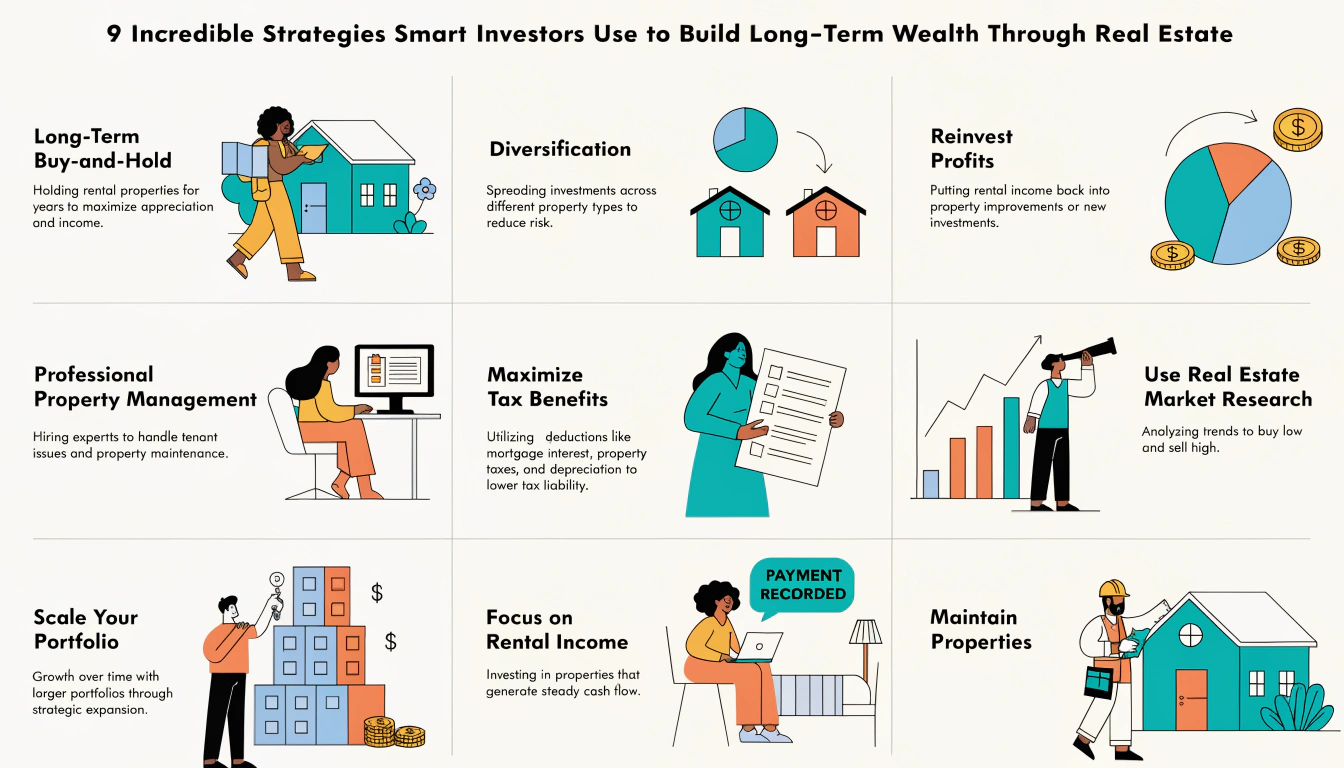
    Real estate has long been considered one of the most reliable ways to build long-term wealth. Smart investors understand that property investments can provide consistent cash flow, appreciation, and financial security over time. Unlike many other investments, real estate offers tangible value and multiple income opportunities.

    Whether you are a beginner or an experienced investor, understanding the right strategies can make a significant difference in your financial success. By following proven investment methods, many investors have turned modest property purchases into powerful wealth-building portfolios.

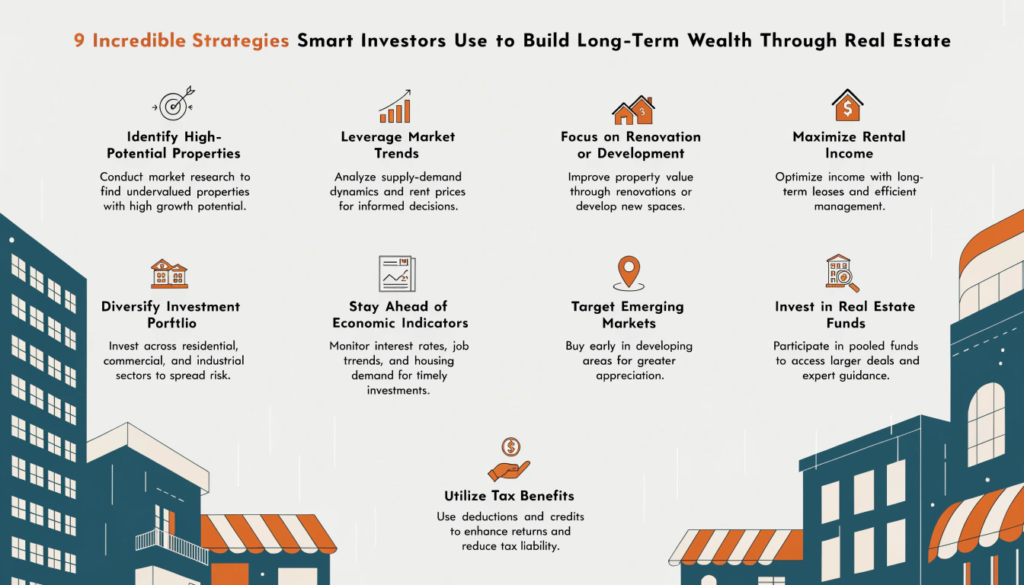
    In this guide, we will explore 9 incredible strategies smart investors use to build long-term wealth through real estate, along with practical insights that can help you make smarter investment decisions.

    Understanding the Power of Real Estate Investment

    Real estate investment is one of the most powerful wealth-building tools available. Property ownership allows investors to benefit from both rental income and property appreciation over time. Unlike stocks that can fluctuate quickly, real estate typically grows in value steadily when purchased in the right market.

    Smart investors understand that patience is key. Real estate wealth rarely happens overnight, but consistent investments can create massive financial stability over time. When investors hold properties for many years, they benefit from increasing property values, rising rental income, and reduced loan balances.

    In addition, real estate provides a hedge against inflation. As living costs increase, property values and rental prices usually rise as well. This makes real estate one of the most reliable long-term investment options.

    Choosing the Right Location for Property Investment

    Location is one of the most important factors in successful real estate investing. Smart investors focus on areas with strong economic growth, good infrastructure, and increasing population demand.

    Properties located near schools, business districts, transportation hubs, and shopping centers usually attract higher demand. These areas also tend to experience faster appreciation in property value over time.

    Experienced investors study local market trends before purchasing a property. They analyze factors such as employment rates, new developments, and rental demand. A good location can dramatically increase the long-term profitability of a real estate investment.

    Investing in Rental Properties for Passive Income

    Rental properties are one of the most popular strategies used by real estate investors. By purchasing properties and renting them to tenants, investors create a steady stream of passive income.

    This income can help cover mortgage payments, maintenance costs, and even generate additional monthly profit. Over time, rental income may increase while mortgage balances decrease, improving overall returns.

    Many investors build wealth by gradually expanding their rental property portfolio. With multiple properties generating income, investors can achieve financial stability and long-term financial independence.

    Leveraging Mortgage Financing to Grow Investments

    Smart investors often use leverage to increase their investment potential. Instead of paying the full price for a property, they use mortgage financing to acquire valuable assets.

    By putting down a smaller amount of capital, investors can control larger properties and benefit from full property appreciation. This allows them to build a portfolio faster than purchasing properties with cash alone.

    Leverage also increases return on investment when property values rise. However, successful investors carefully manage their financing to ensure that rental income covers loan payments and expenses.

    Buying Undervalued Properties

    Another powerful wealth-building strategy is purchasing undervalued properties. These properties may require repairs, renovations, or improved management.

    Smart investors identify opportunities where the property price is lower than the potential market value. After making improvements, they can increase the property’s worth significantly.

    This strategy, often known as value-added investing, allows investors to build equity quickly. Many successful real estate investors have grown their portfolios by identifying and transforming undervalued properties.

    House Hacking for Beginner Investors

    House hacking is a popular strategy for beginner real estate investors. This involves purchasing a multi-unit property, living in one unit, and renting out the others.

    The rental income from other tenants can help cover mortgage payments and living expenses. In some cases, investors may even live rent-free while building equity in the property.

    This approach allows beginners to enter the real estate market with lower financial risk. Over time, investors can move into another property and repeat the process to grow their investment portfolio.

    Long-Term Property Appreciation Strategy

    Real estate values generally increase over time, especially in growing markets. Smart investors focus on properties that are likely to appreciate due to economic development and population growth.

    Holding properties for the long term allows investors to maximize appreciation gains. Even moderate annual increases in property value can result in substantial wealth over decades.

    Investors who adopt a long-term mindset avoid frequent buying and selling. Instead, they focus on holding valuable assets and allowing market growth to increase their wealth.
    Diversifying Real Estate Investments

    Diversification is a key principle in any successful investment strategy. Smart real estate investors often invest in different types of properties to reduce risk.

    This may include residential homes, apartment buildings, commercial spaces, and vacation rentals. Each property type has unique benefits and income opportunities.

    By diversifying their portfolio, investors protect themselves from market fluctuations. If one property sector slows down, others may continue generating income.

    Using Professional Property Management

    Managing multiple properties can become time-consuming. Many investors hire professional property management companies to handle tenant screening, maintenance, and rent collection.

    This allows investors to focus on expanding their portfolio instead of dealing with daily management tasks. Professional management also improves tenant satisfaction and property upkeep.

    With reliable management, investors can scale their investments more efficiently and maintain consistent income from their properties.

    Understanding Market Cycles

    Real estate markets move in cycles that include growth, stability, and decline phases. Smart investors study these cycles carefully before making investment decisions.

    Buying properties during market downturns can provide excellent opportunities. When the market recovers, property values often rise significantly.

    Understanding market timing helps investors avoid overpaying for properties and maximize long-term profits.

    Building Strong Financial Planning

    Successful investors always plan their finances carefully before purchasing property. They calculate potential rental income, maintenance costs, taxes, and mortgage payments.

    Having a clear financial plan reduces risks and ensures that investments remain profitable. Smart investors also maintain cash reserves for unexpected expenses.

    Proper financial management plays a crucial role in long-term real estate success.

    Renovating to Increase Property Value

    Renovation can significantly improve the value of a property. Strategic upgrades such as modern kitchens, bathrooms, and energy-efficient features attract better tenants and buyers.

    These improvements often increase rental income and resale value. Smart investors focus on renovations that provide the highest return on investment.

    Carefully planned upgrades can transform average properties into high-value assets.

    Investing in Emerging Markets

    Many experienced investors search for emerging real estate markets with strong growth potential. These areas often have lower property prices but high future demand.

    Cities experiencing population growth, infrastructure development, and new businesses offer attractive investment opportunities.

    Early investments in such markets can lead to significant long-term profits.

    Maintaining Properties Properly

    Property maintenance plays an important role in protecting investment value. Well-maintained properties attract better tenants and reduce repair costs over time.

    Regular inspections, timely repairs, and quality upgrades ensure that the property remains competitive in the market.

    Smart investors understand that good maintenance preserves both property value and rental income.

    Building a Reliable Investment Team

    Real estate investing often requires a team of professionals including real estate agents, attorneys, contractors, and financial advisors.

    Having a reliable team allows investors to make better decisions and avoid costly mistakes.

    Experienced professionals can also help investors identify profitable opportunities and manage complex transactions.

    Reinvesting Rental Profits

    One of the most effective wealth-building strategies is reinvesting rental profits into additional properties.

    Instead of spending all rental income, smart investors use these funds to grow their portfolio.

    Over time, this compounding strategy can lead to significant financial growth and passive income.

    Using Tax Advantages in Real Estate

    Real estate offers several tax benefits that can improve investment returns. These include depreciation deductions, mortgage interest deductions, and property tax deductions.

    Smart investors work with tax professionals to maximize these benefits legally.

    Tax advantages can significantly increase the overall profitability of real estate investments.

    Monitoring Investment Performance

    Successful investors regularly evaluate the performance of their properties. They analyze rental income, expenses, and market trends.

    This helps them identify underperforming assets and make necessary adjustments.

    Regular monitoring ensures that investments remain profitable and aligned with financial goals.

    Scaling Real Estate Portfolio Gradually

    Building wealth through real estate often involves gradual portfolio expansion. Smart investors start with one property and expand strategically over time.

    This approach allows them to learn from experience and reduce financial risks.

    With careful planning and patience, investors can eventually build a large and profitable property portfolio.

    Staying Patient and Consistent

    Real estate investing is a long-term journey that requires patience and discipline. Market fluctuations may occur, but long-term investors usually benefit from steady growth.

    Consistency in buying quality properties, managing them well, and reinvesting profits leads to financial success.

    Many successful real estate investors built their wealth over decades through disciplined strategies.

    Conclusion

    Real estate remains one of the most powerful methods for building long-term wealth. By following smart investment strategies such as choosing the right location, generating rental income, leveraging financing, and reinvesting profits, investors can create sustainable financial growth.

    Successful real estate investing requires patience, research, and strategic decision-making. Investors who stay committed to these principles often achieve financial independence and long-term security through property ownership.

    FAQs

    1. Is real estate a good investment for long-term wealth?
    Yes, real estate offers rental income, appreciation, and tax benefits, making it one of the best long-term investment options.

    2. How much money do I need to start investing in real estate?
    The amount varies depending on location and property type, but many investors start with a small down payment using mortgage financing.

    3. What is the safest real estate investment strategy?
    Investing in rental properties in strong locations is generally considered one of the safest strategies.

    4. Can beginners succeed in real estate investing?
    Yes, beginners can succeed by learning the market, starting small, and using strategies like house hacking or rental investments.

    5. How long does it take to build wealth through real estate?
    Most investors build significant wealth over 10–20 years through consistent property investments and appreciation.
  • Hello world!

    Welcome to WordPress. This is your first post. Edit or delete it, then start writing!

  • 6 Shocking Home Buying Errors That Can Cost New Buyers Thousands of Dollars

    6 Shocking Home Buying Errors That Can Cost New Buyers Thousands of Dollars

    Introduction

    Buying a home is one of the most exciting milestones in a person’s life. It represents stability, financial growth, and the beginning of a new chapter. However, for many first-time buyers, the process can be overwhelming and full of unexpected challenges. Without proper knowledge and preparation, buyers often make costly mistakes that can affect their finances for years.

    Real estate transactions involve large amounts of money, legal documentation, and long-term commitments. Even small errors during the home buying process can lead to significant financial losses. That is why experienced buyers and real estate professionals always emphasize the importance of careful planning and informed decision-making.

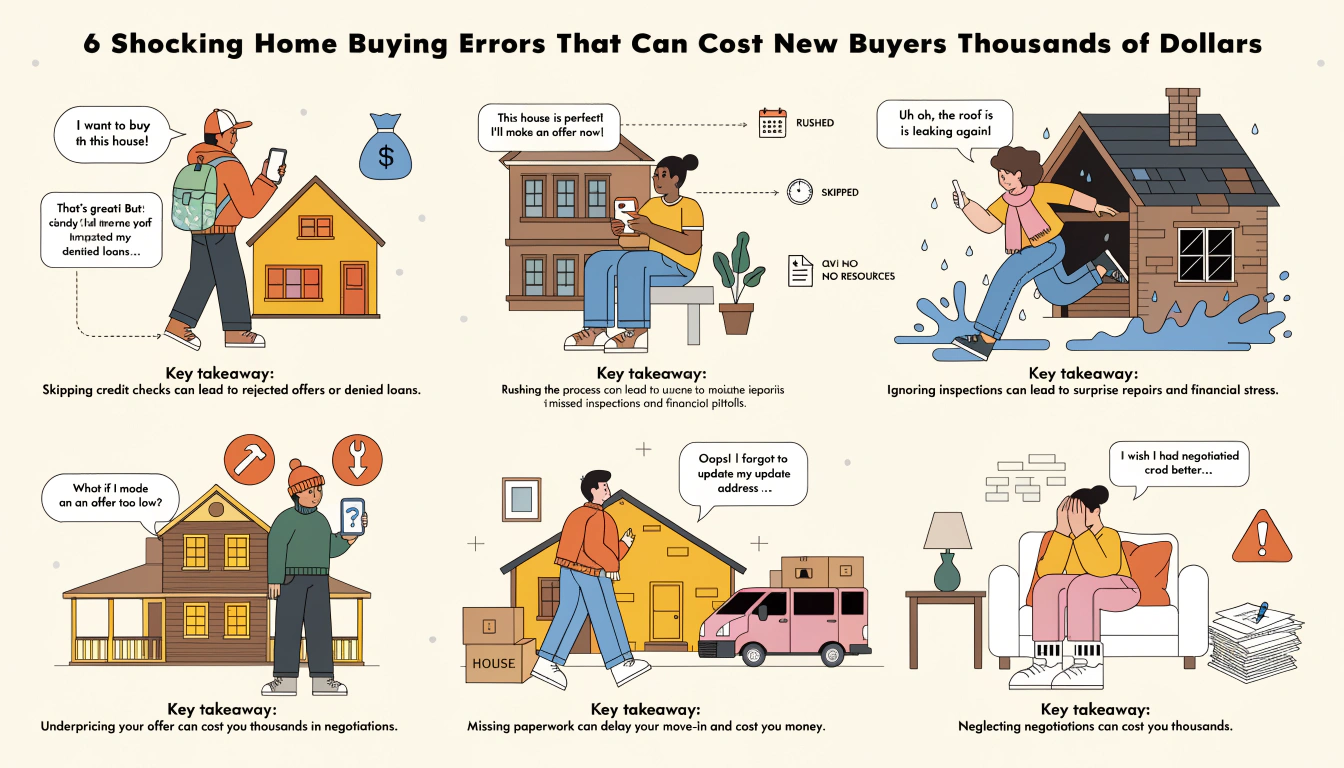
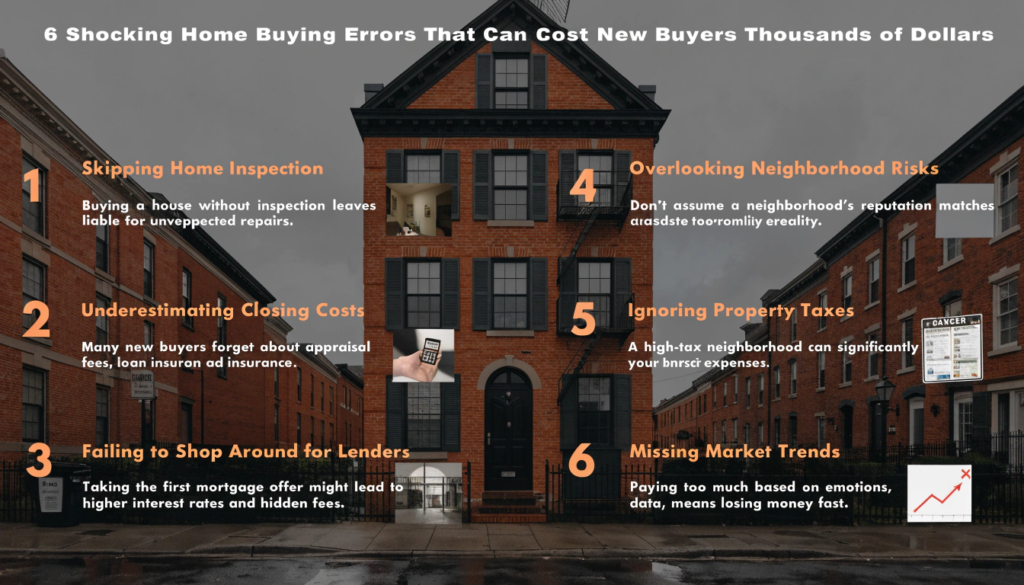
    Understanding the most common home buying mistakes can help new buyers avoid unnecessary stress and protect their investment. In this article, we will explore several shocking home buying errors that can cost new buyers thousands of dollars and explain how to avoid them.

    Ignoring Financial Preparation Before House Hunting

    Many first-time buyers make the mistake of looking for homes before reviewing their financial situation. Without a clear understanding of income, savings, and debt levels, buyers may fall in love with properties they cannot realistically afford. This often leads to disappointment and wasted time during the home search process.

    Financial preparation involves evaluating your credit score, calculating your monthly budget, and understanding how much you can comfortably spend on a mortgage. Buyers who skip this step may struggle to secure financing or end up with loan terms that are not favorable.

    Proper preparation also includes saving for closing costs, inspections, and moving expenses. Taking the time to organize your finances before beginning the search can prevent many expensive mistakes later.

    Skipping Mortgage Pre-Approval

    Another common mistake is starting the home search without obtaining mortgage pre-approval. Pre-approval is a process where a lender reviews your financial information and determines how much they are willing to lend you. Without this step, buyers may waste time viewing homes that are outside their price range.

    Mortgage pre-approval also strengthens your position when making an offer. Sellers are more likely to accept offers from buyers who have already been approved by a lender. It shows that the buyer is serious and financially prepared to complete the purchase.

    Skipping this step can delay the buying process and may even cause buyers to lose a desirable property to another prepared buyer.

    Underestimating the True Cost of Homeownership

    Many buyers focus only on the price of the home and the monthly mortgage payment. However, homeownership includes many additional costs that can quickly add up. Property taxes, homeowners insurance, maintenance, repairs, and utilities all contribute to the overall expense.

    Failing to consider these costs can put significant pressure on a household budget. Some buyers find themselves financially stretched after moving in, which can create long-term stress.

    A smart buyer carefully calculates the total cost of owning a home before making a purchase. This ensures that the investment remains manageable and sustainable.

    Not Hiring a Qualified Real Estate Agent

    Trying to buy a home without professional guidance can lead to serious problems. Real estate agents have extensive knowledge of the market, pricing strategies, and negotiation techniques. Buyers who attempt to handle the process alone often miss important details.

    An experienced agent can help identify fair property values, guide buyers through paperwork, and negotiate better terms with sellers. They can also identify potential issues that inexperienced buyers may overlook.

    Without professional representation, buyers may overpay for a property or miss critical legal protections during the transaction.

    Skipping the Home Inspection

    One of the most dangerous mistakes in real estate is skipping the home inspection. A property may look perfect during a showing, but hidden issues can exist beneath the surface. Structural problems, plumbing issues, or electrical faults can cost thousands of dollars to repair.

    A professional home inspection provides a detailed evaluation of the property’s condition. Inspectors identify potential problems that buyers may not notice during a walkthrough.

    Skipping this step to save money or speed up the process can lead to major repair expenses after moving in.

    Letting Emotions Control the Purchase

    Buying a home is an emotional experience, but decisions driven purely by emotions can be risky. Some buyers become so attached to a property that they ignore warning signs or exceed their budget to secure the home.

    Emotional buying can lead to overpaying or choosing a property that does not truly meet long-term needs. Buyers should approach the process with a balanced mindset and carefully evaluate each property.

    Keeping financial goals and practical needs in focus helps buyers make better investment decisions.

    Not Researching the Neighborhood

    The quality of the neighborhood plays a significant role in a property’s long-term value and livability. Some buyers focus entirely on the house itself and forget to research the surrounding area.

    Important factors include school quality, crime rates, transportation access, and future development plans. A beautiful home in a poorly located neighborhood may not hold its value over time.

    Taking time to explore the area, visit at different times of the day, and speak with residents can provide valuable insights.

    Overlooking Future Resale Value

    Even if buyers plan to live in a home for many years, resale value should always be considered. Market conditions change, and unexpected life events may require selling the property sooner than expected.

    Homes with desirable features such as good location, functional layouts, and nearby amenities tend to attract more buyers in the future.

    Ignoring resale potential can make it harder to sell the property later or reduce the return on investment.

    Making Large Purchases Before Closing

    Some buyers make the mistake of purchasing furniture, cars, or other expensive items before closing on their home. These purchases can affect credit scores and debt-to-income ratios, which lenders carefully monitor.

    Changes in financial circumstances during the loan approval process can cause lenders to reconsider or even cancel the mortgage approval.

    Buyers should avoid making major financial changes until the home purchase is fully completed.

    Failing to Read the Contract Carefully

    Real estate contracts are complex legal documents that contain important details about the transaction. Some buyers sign paperwork without fully understanding the terms.

    Contract clauses may include contingencies, deadlines, and responsibilities for both parties. Missing these details can create legal complications or unexpected financial obligations.

    Carefully reviewing the contract with a real estate professional or attorney can prevent costly misunderstandings.

    Overbidding in Competitive Markets

    In competitive markets, buyers may feel pressure to submit very high offers to secure a property. While this may win the deal, it can also result in paying significantly more than the property’s true value.

    Overbidding can create financial strain and reduce future investment returns. Buyers should base their offers on market research and professional advice rather than emotions.

    Maintaining discipline during negotiations is essential for making smart investment decisions.

    Ignoring Property Insurance Needs

    Homeowners insurance protects buyers from unexpected disasters such as fires, storms, or theft. Some buyers overlook the importance of selecting adequate insurance coverage.

    Choosing minimal coverage may save money initially but can create serious financial problems if damage occurs.

    Carefully reviewing insurance policies ensures that the property is properly protected.

    Not Understanding Closing Costs

    Closing costs are an essential part of any real estate transaction. These costs include lender fees, title services, legal charges, and various administrative expenses.

    Many first-time buyers are surprised by how much closing costs can add to the total purchase price. Without proper planning, these expenses can create financial stress.

    Understanding these costs in advance allows buyers to prepare financially and avoid surprises.

    Failing to Compare Mortgage Options

    Not all mortgage loans are the same. Different lenders offer different interest rates, terms, and fees. Some buyers accept the first loan offer they receive without exploring alternatives.

    Comparing multiple lenders can result in better interest rates and lower monthly payments. Even small differences in interest rates can save thousands of dollars over the life of the loan.

    Smart buyers take time to research and compare financing options before making a decision.

    Neglecting Property Maintenance Costs

    Homeownership comes with ongoing maintenance responsibilities. Roof repairs, plumbing fixes, landscaping, and appliance replacements all require financial planning.

    Buyers who fail to budget for maintenance may struggle when unexpected repairs occur.

    Setting aside a maintenance fund helps homeowners handle these expenses without financial strain.

    Rushing the Home Buying Process

    Buying a home is a major financial decision that should never be rushed. Some buyers feel pressure to move quickly due to market competition or personal timelines.

    Rushing can lead to overlooked details, poor negotiations, or selecting a property that does not fully meet expectations.

    Taking the time to carefully evaluate options leads to better long-term outcomes.

    Misjudging the Size of the Property

    A property that appears spacious during a viewing may feel smaller after moving in. Buyers sometimes fail to consider their long-term space needs.

    Growing families, home offices, and storage requirements can significantly affect living comfort.

    Evaluating future lifestyle needs helps buyers choose a home that remains suitable over time.

    Ignoring Local Market Trends

    Real estate markets vary widely depending on location and economic conditions. Buyers who do not study market trends may overpay or purchase during unfavorable conditions.

    Understanding whether the market favors buyers or sellers can influence negotiation strategies and pricing decisions.

    Researching local trends provides valuable insights before making a purchase.

    Not Planning for Long-Term Living Costs

    In addition to mortgage payments, homeowners must plan for utilities, property taxes, association fees, and maintenance costs.

    Ignoring these expenses can create financial strain after purchasing the property.

    A realistic long-term financial plan ensures sustainable homeownership.

    Failing to Seek Professional Advice

    Buying a home involves legal, financial, and technical complexities. Professional guidance from real estate agents, inspectors, and financial advisors can prevent costly mistakes.

    Experts provide valuable insights that help buyers make informed decisions throughout the process.

    Seeking professional support increases confidence and reduces risks during the transaction.

    Conclusion

    Buying a home is one of the most significant financial decisions a person can make. While the process can be exciting, it also comes with potential pitfalls that can cost buyers thousands of dollars. Understanding common mistakes such as skipping inspections, ignoring financial preparation, or rushing the process can help buyers avoid serious problems.

    With careful planning, professional guidance, and thorough research, new buyers can make smarter decisions and protect their investment. A well-informed approach ensures that homeownership becomes a rewarding and financially sound experience.

    FAQs

    What is the biggest mistake first-time homebuyers make?
    One of the biggest mistakes is failing to prepare financially and not understanding the full cost of homeownership.

    Why is a home inspection important?
    A home inspection identifies hidden problems in the property that could require expensive repairs after purchase.

    How much should buyers save before purchasing a home?
    Buyers should save for a down payment, closing costs, and an emergency fund for maintenance and repairs.

    Can buying a home without an agent be risky?
    Yes, without professional guidance buyers may miss important details or overpay for a property.

    What should buyers check before choosing a neighborhood?
    Buyers should review school quality, safety, amenities, transportation access, and future development plans.

    Tags

    home buying mistakes
    first time home buyer tips
    real estate investment guide
    property buying tips
    real estate advice
    home purchase guide
    real estate mistakes to avoid